


A Buyer’s Brokerage Agreement is more than “paperwork.” It sets expectations, clarifies duties, and puts compensation and representation in writing— which is especially important in today’s market where transparency is non-negotiable.
Table of Contents
- Introduction: What Is a Buyer’s Brokerage Agreement?
- Why Buyer’s Brokerage Agreements Are Essential
- Key Elements of the Agreement
- How the NAR Settlement Changed Buyer Agreements
- Florida-Specific Considerations
- Common Misconceptions About Buyer Agreements
- FAQs About Buyer’s Brokerage Agreements
- Conclusion: Making the Most of Your Buyer’s Brokerage Agreement
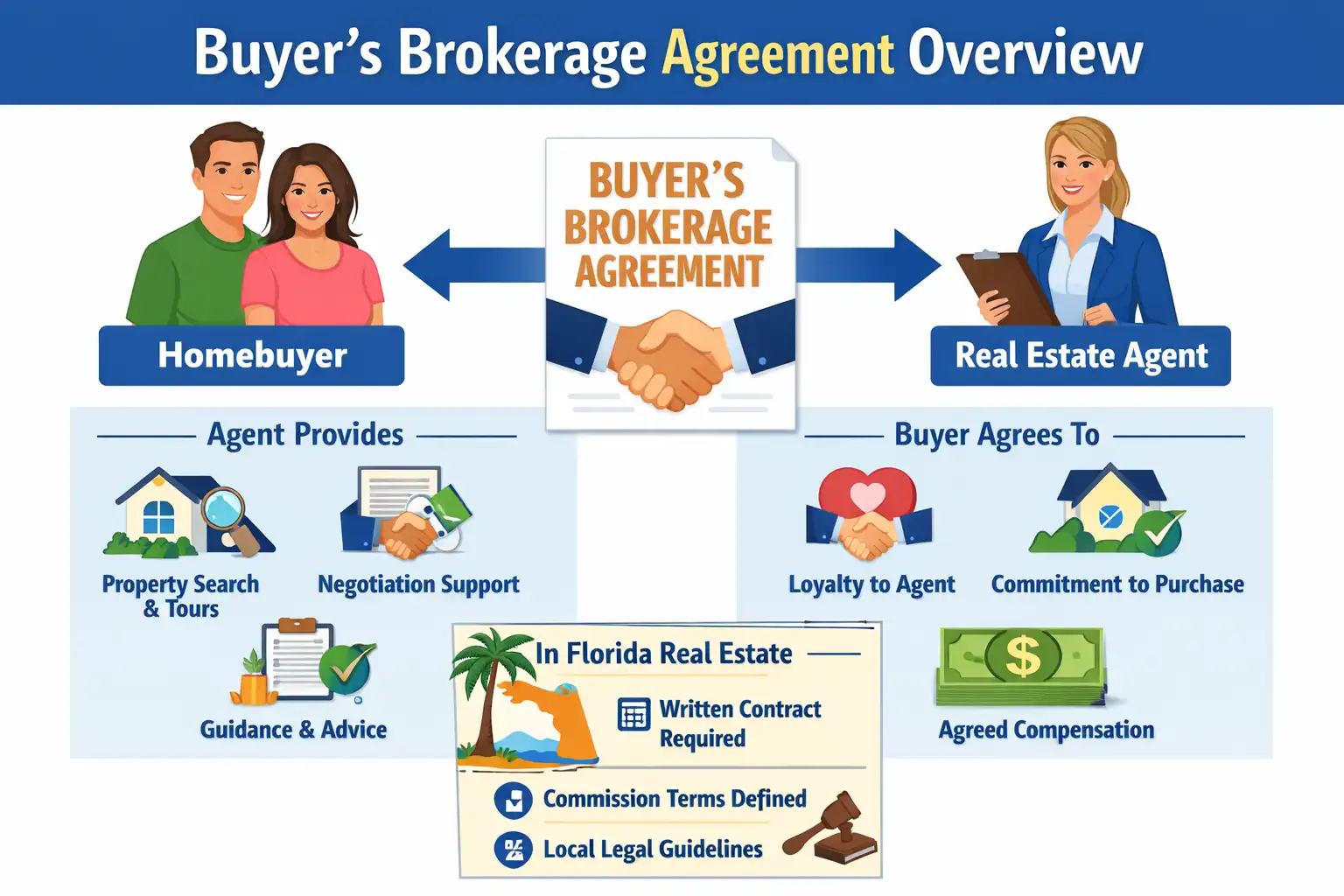
1. Introduction: What Is a Buyer’s Brokerage Agreement?
A Buyer’s Brokerage Agreement (also called a Buyer-Broker Agreement, Buyer Representation Agreement, or Buyer Agency Agreement) is a written contract between a prospective buyer and a real estate agent or brokerage. It outlines how the agent will represent the buyer during the home-buying process, including duties, obligations, compensation, and the scope of services.
In practical terms, it answers the questions that matter most up front: Who represents whom? What services are included? How will the agent be compensated?
This formal agreement is now widely required before agents provide brokerage services such as property tours or negotiations—helping buyers clearly understand the relationship before the transaction gets serious.
2. Why Buyer’s Brokerage Agreements Are Essential
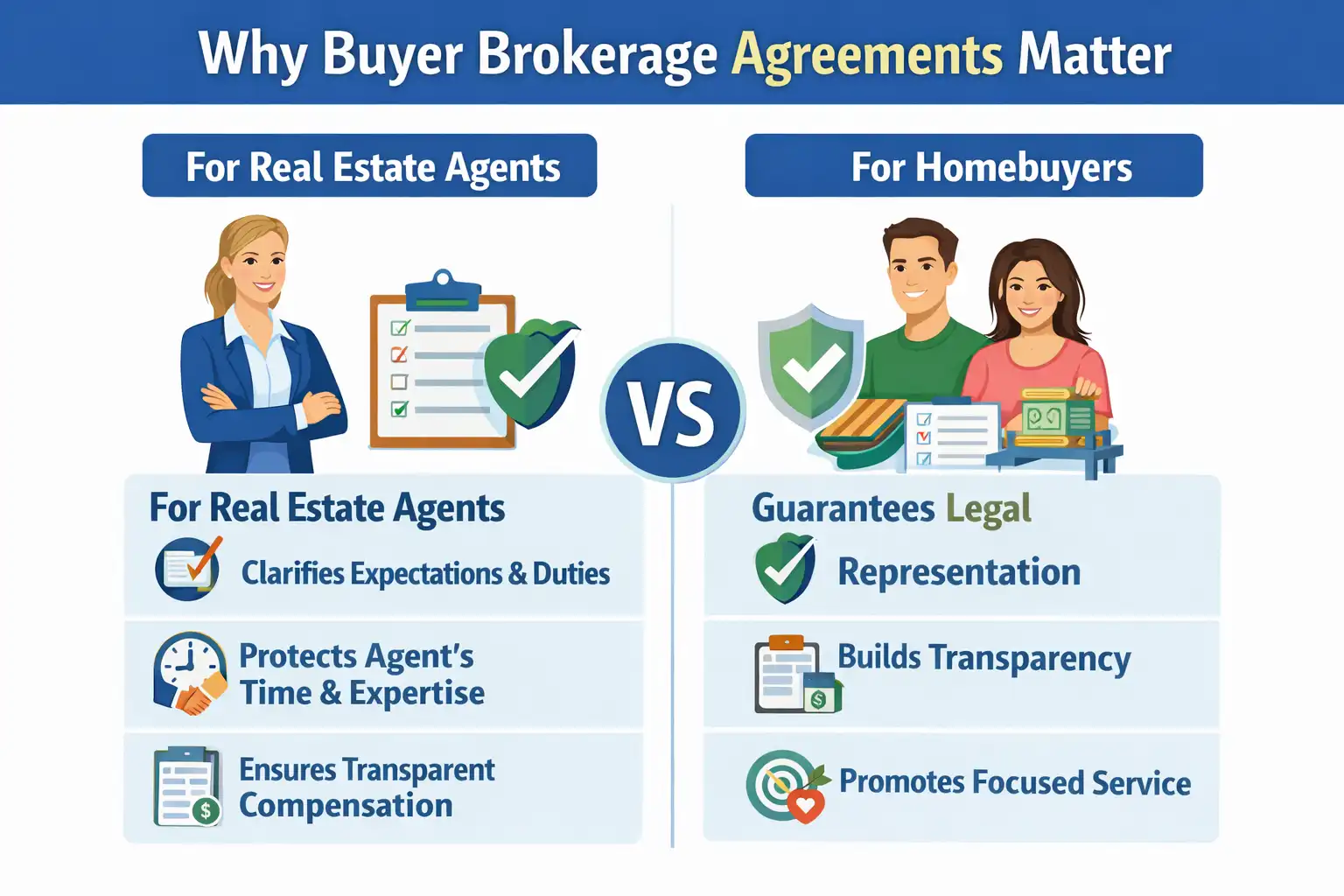
For Real Estate Agents
Clarifies Expectations and Scope of Work
The agreement defines agent services—from property searches and showings to negotiations and closing support—minimizing misunderstandings and “scope creep.”
Protects Time and Expertise
Agents invest significant time helping buyers. A signed agreement ensures that effort is acknowledged and compensated according to negotiated terms.
Ensures Transparent Compensation
With recent industry changes, compensation terms must be negotiated upfront and appear clearly in the agreement—reducing disputes later and aligning expectations.
For Homebuyers
Guarantees Professional Representation
This agreement secures professional representation where your agent is dedicated to your interests, negotiations, and strategy throughout the purchase process.
Builds Transparency
When expectations and costs are laid out in writing, buyers know what services they’ll receive and how the agent is paid—reducing confusion.
Promotes Focused Service
Agents are more motivated to serve committed clients. An exclusive agreement can result in more proactive guidance, tighter strategy, and a more personalized experience.
3. Key Elements of the Agreement
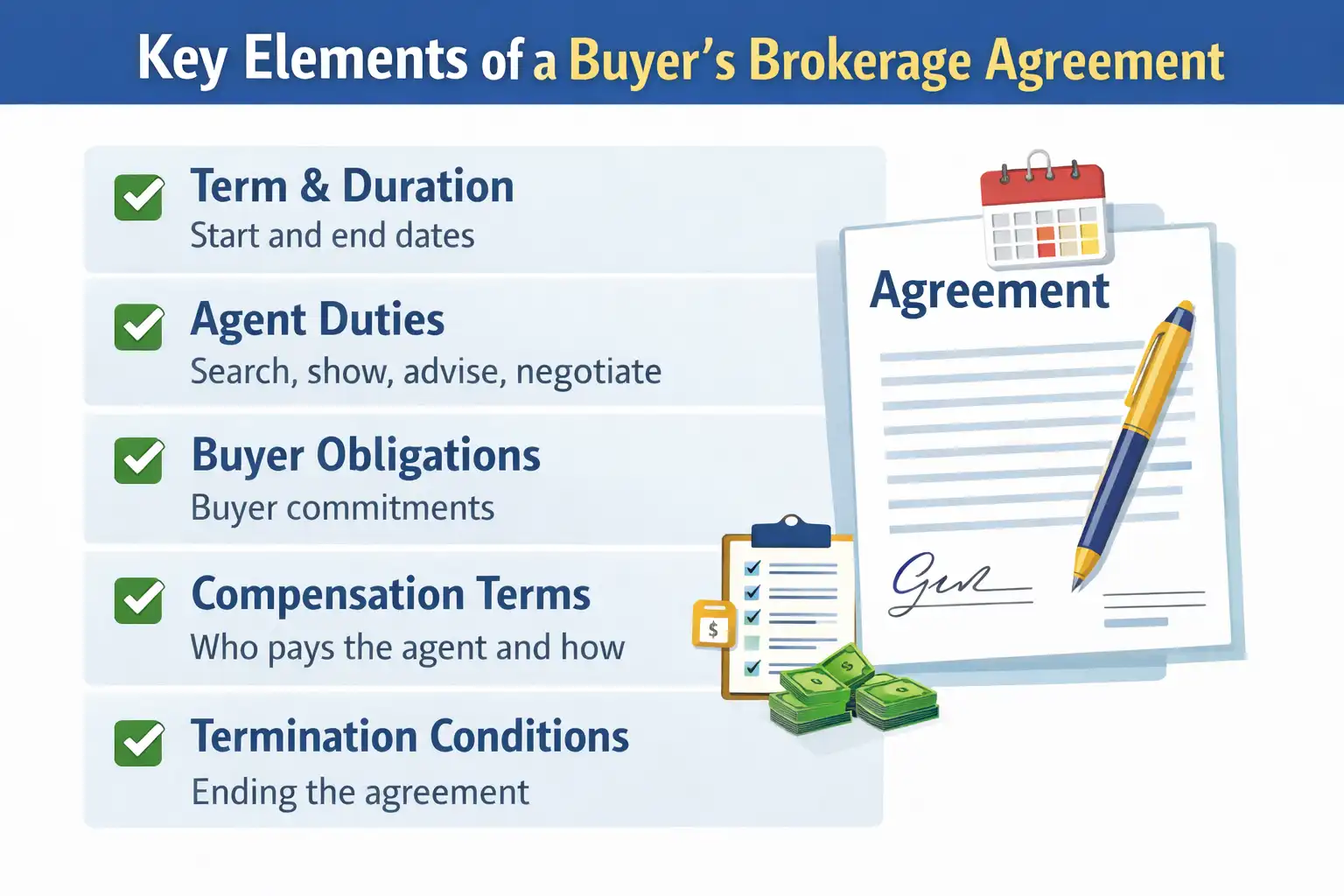
A typical buyer’s brokerage agreement includes:
- Term and Duration: Start and end dates for the relationship.
- Agent Duties: What the agent will do (search, show, advise, negotiate, coordinate to closing).
- Buyer Obligations: What the buyer agrees to provide or commit to (financing readiness, truthful disclosures, timely decisions).
- Compensation Terms: Who pays the agent and how (buyer-paid, seller credit, or other structure—based on the agreement).
- Termination Conditions: How either party can end the agreement and what happens with pending opportunities.
The compensation clause is especially important. Commission levels are negotiable and should be written clearly so everyone understands how the agent is paid.
Best-Practice Add-Ons (Helpful in the Real World)
- Geographic scope: Counties/cities/neighborhoods covered (helps avoid confusion later).
- Property type scope: Single-family, condo, new construction, investment property, etc.
- Communication expectations: Response time, preferred channels, showing notice timing.
- Short-term options: Trial periods, single-property agreements, or adjustable terms.
4. How the NAR Settlement Changed Buyer Agreements
As part of major industry changes, many Realtors® and MLS participants now secure written buyer agreements before showing homes or providing brokerage services.
This shift is designed to enhance transparency—helping buyers clearly understand the agent’s role, duties, and compensation from the outset.
5. Florida-Specific Considerations
Is It Required in Florida?
In Florida, many agents ask buyers to sign a buyer agreement before touring properties as a standard business practice, especially among Realtors® and MLS participants. While state law does not necessarily mandate a buyer agreement for every scenario, a written agreement is commonly used to establish the relationship and compensation terms before brokerage services begin.
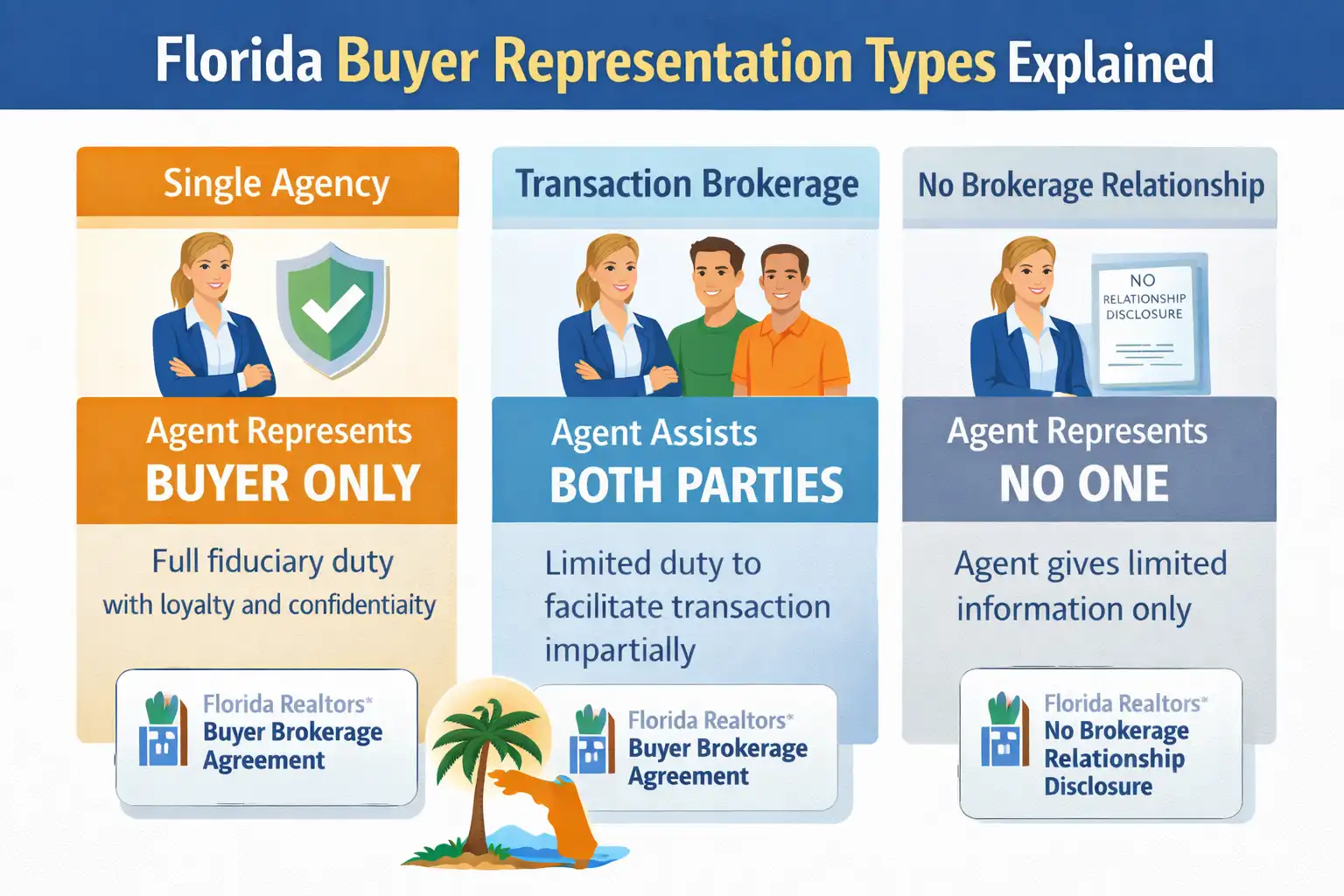
Types of Representation in Florida
Florida allows several brokerage relationship types. The key is understanding what you are (and are not) getting in writing.
Single Agency
A higher-duty relationship where the agent represents only the buyer’s interests. This generally involves a more fiduciary-style obligation.
Transaction Brokerage
A more limited role that assists both parties in the transaction without full fiduciary duties—focused on facilitating the deal.
No Brokerage Relationship
In some circumstances, there may be no agency relationship, and written disclosures are typically used to clarify that status. Buyers should read disclosures carefully so they understand whether the agent is representing them or simply providing limited information.
Florida Realtors Buyer Brokerage Agreements
Florida Realtors has introduced updated Buyer Brokerage Agreement forms reflecting different relationship types and evolving industry rules. The specific form used (and the obligations created) can vary—so it’s worth reviewing the relationship type, compensation language, and termination terms with care.
6. Common Misconceptions About Buyer Agreements
“Signing locks me in forever.”
Not true. Terms, duration, and exit conditions are negotiable, and many agreements include termination clauses or allow for short trial periods.
“I automatically owe commission.”
Compensation is determined by the agreement. In some situations, buyers may negotiate seller concessions/credits or other structures—what matters is what’s written and agreed upon in advance.
“It’s required for open houses.”
If an agent is only hosting an open house and not providing individualized brokerage services (like advising, negotiating, or showing privately), a written agreement may not be required in that limited context. However, requirements and brokerage policies vary—so expect agents to clarify before offering services.
7. FAQs About Buyer’s Brokerage Agreements
Q1. What happens if I don’t sign a buyer’s brokerage agreement?
You can still visit open houses or explore properties independently, but many agents may limit services—such as private showings, offer strategy, and negotiations— without a signed agreement that clarifies representation and compensation.
Q2. Can the agreement be short-term?
Yes. Agreements can be tailored to a single day, a single property, a narrow search window, or several months. A short-term agreement can be a practical way to “test fit” while still keeping expectations clear.
Q3. Can I negotiate the commission amount?
Yes. Commission is not dictated by law and should be clearly specified in the agreement. Buyers and agents can negotiate compensation structure and amount based on services, market conditions, and the purchase scenario.
Q4. What if the seller doesn’t pay my agent?
The agreement can include terms allowing the buyer to pay directly or to negotiate a seller credit/concession toward the agent’s compensation. The key is to address this possibility before writing offers so there are no last-minute surprises.
Q5. Can I switch agents after signing?
Potentially—review the termination clause and communicate directly with your agent. Contracts vary, and many issues can be resolved through a conversation, a mutual release, or an adjusted scope/term.
8. Conclusion: Making the Most of Your Buyer’s Brokerage Agreement
Whether you’re an agent or a homebuyer, the Buyer’s Brokerage Agreement is a valuable tool that brings clarity, transparency, and protection to the real estate buying process. In Florida especially, understanding how these agreements fit into local practices and brokerage relationship types can help you navigate your transaction more confidently and avoid surprises.
The goal isn’t to make the process “more complicated.” The goal is to make the relationship clear—so the strategy, services, and compensation are aligned before homes are toured, offers are written, and negotiations begin.